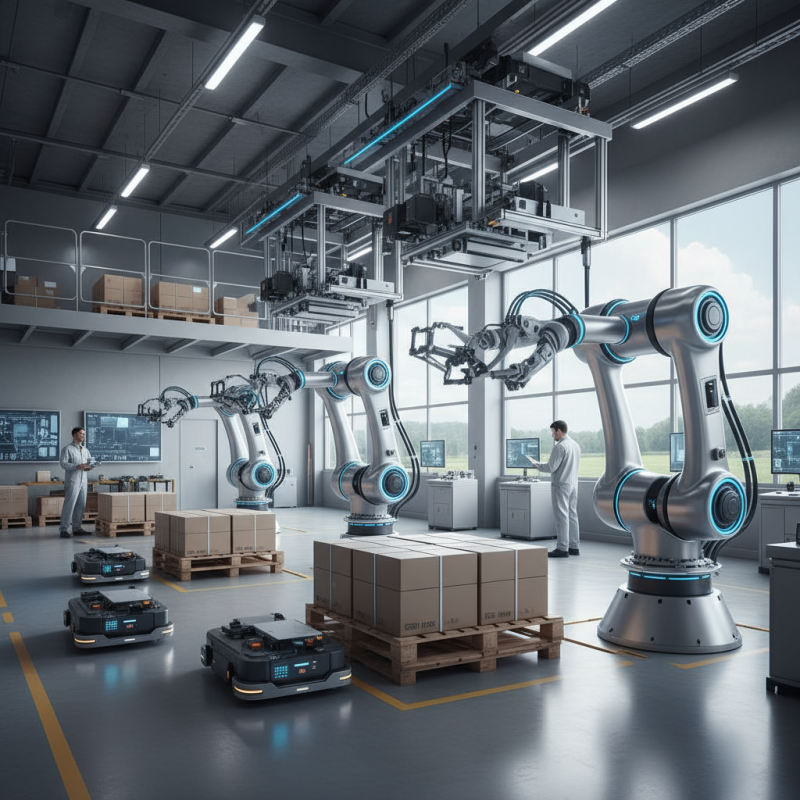
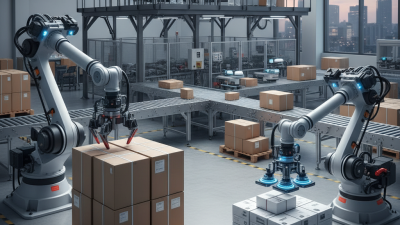
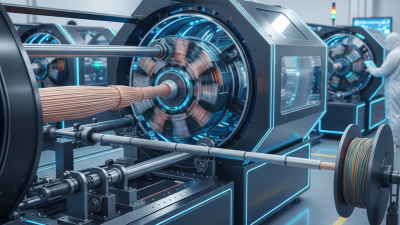
The surge in automation reshapes modern manufacturing. Companies seek efficiency and precision. Palletizing Robot Applications emerge as vital solutions. They streamline workflows and enhance productivity in various industries.
Manufacturers face challenges. Labor shortages and rising costs push them to innovate. Palletizing robots offer consistency, reducing human error. They perform repetitive tasks tirelessly, meeting high demand. Though effective, there are concerns about implementation costs.
Balancing automation and workforce needs remains complex. Organizations must thoughtfully integrate these technologies. Continuous evaluation of Palletizing Robot Applications is essential. It's not just about replacing humans but enhancing capabilities. Ultimately, the goal is to create a harmonious and efficient manufacturing environment.
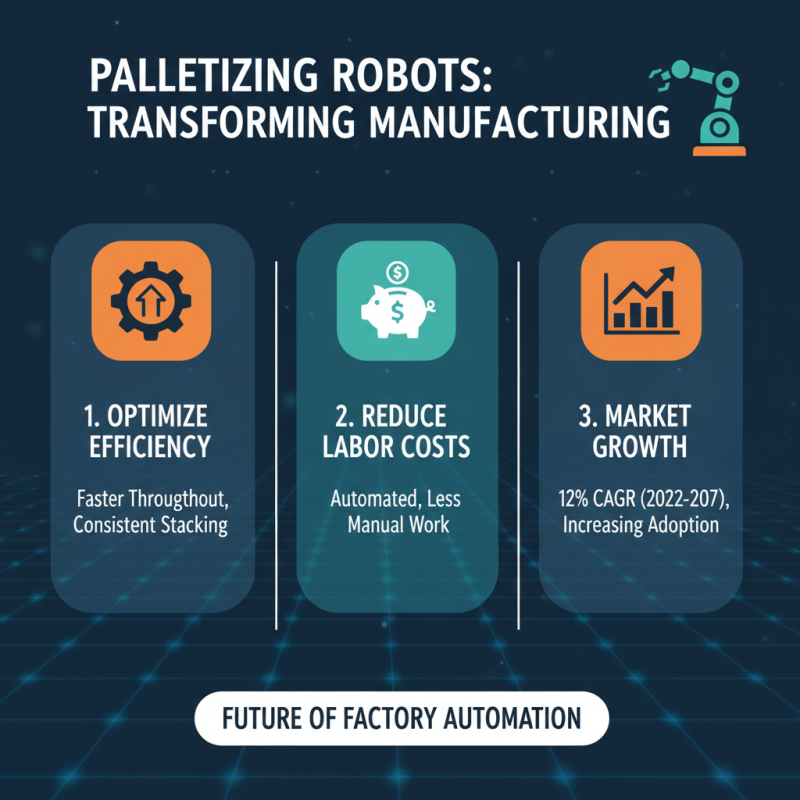
Palletizing robots are transforming manufacturing automation in significant ways. They optimize efficiency and reduce labor costs. According to a recent industry report, the market for palletizing robots is expected to grow at a CAGR of 12% from 2022 to 2027. This growth underscores their increasing importance in modern factories.
These robots can handle various packaging materials. Some are designed for specific products, while others are versatile and adaptable. Using advanced technologies, they improve the speed and accuracy of palletizing tasks. However, integrating these systems can come with challenges. Companies must ensure compatibility with existing processes.
Tips: Focus on training operators well. Proper training enhances productivity and safety. Also, evaluate your workload regularly. It helps in adjusting your robotic systems for optimal performance. Engaging with all stakeholders ensures smooth implementation.
The rise of palletizing robots is reshaping manufacturing automation. Key technologies play a crucial role in this transformation. Vision systems, for example, allow robots to perceive their environment. They help in accurately identifying products for packaging. High-speed image processing is essential here. It enables quick decisions on how to handle items.
Artificial intelligence also drives innovation in palletizing. AI algorithms optimize the placement of packages on pallets. This increases efficiency and reduces waste. Machine learning allows robots to improve over time. They can learn from previous experiences and adapt to new scenarios.
Tips: Assess your current workflow. Identify bottlenecks that could benefit from automation. Training staff on new technology is equally important. This will ensure that everyone is on the same page. Robotics offer great advantages but require strategy and planning to implement effectively. It's essential to regularly review performance and make adjustments as needed. Don’t overlook the human element in this tech-centric evolution.
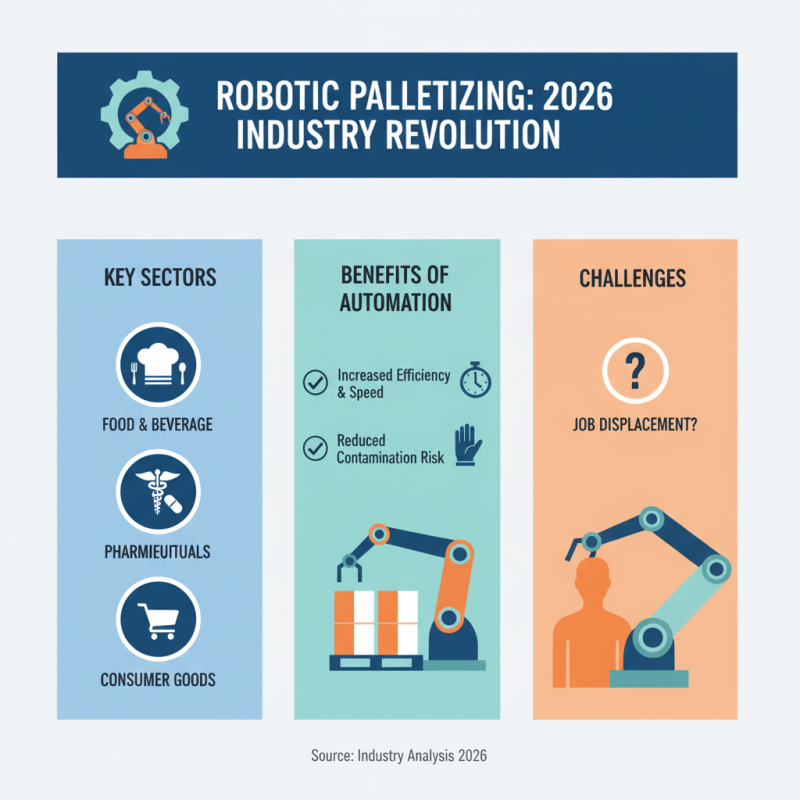
The adoption of palletizing robots is reshaping various industries in 2026. Robotics technology has shown promise in sectors like food and beverage, pharmaceuticals, and consumer goods. These industries embrace automation for efficiency. In food production, for example, robots can speed up the packaging of products, reducing the risk of contamination. However, relying heavily on automation can raise questions about job displacement.
Pharmaceutical manufacturers are also seeing benefits. Robots can handle repetitive tasks with precision. This leads to better quality control and decreased human error. Yet, implementing these systems is costly and requires skilled operators for maintenance. Additionally, some companies might face difficulties in integrating new systems with existing processes.
The consumer goods industry finds great value in palletizing robots as well. They improve the speed of assembly lines and distribution. This allows for faster market response times. However, companies must balance efficiency with flexibility. Rapid shifts in consumer demand can challenge rigid automation systems. Investing in adaptable technology is vital for staying competitive.
The implementation of palletizing robots in production lines has surged in recent years. According to a report by MarketsandMarkets, the palletizing robot market is expected to grow from $4.3 billion in 2021 to $8.5 billion by 2026. This growth highlights the increasing demand for automation in manufacturing environments.
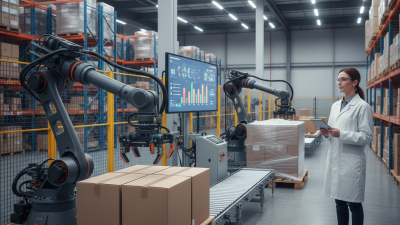
Palletizing robots enhance efficiency significantly. They can operate continuously without fatigue. A study indicates that these robots can increase throughput by up to 30%. Moreover, they reduce labor costs by automating repetitive tasks. However, implementing such systems requires careful planning. Integrating robots with existing machines can prove challenging.
The safety aspect is crucial as well. Robots can handle heavy loads and reduce workplace injuries. However, their operation may need additional safety measures to protect workers. Balancing productivity and safety is vital. Companies should continuously assess their robotic solutions to optimize performance while minimizing risks.
| Application Area | Benefits | Types of Robots | Efficiency Gain (%) | Cost Reduction (%) |
|---|---|---|---|---|
| Food and Beverage | Improved speed and accuracy in product handling | Articulated Robots | 25 | 15 |
| Consumer Goods | Increased flexibility in packing processes | Collaborative Robots | 30 | 20 |
| Electronics | Reduction of human error and enhanced precision | SCARA Robots | 40 | 25 |
| Pharmaceuticals | Regulatory compliance and safety | Delta Robots | 35 | 10 |
| Automotive | Streamlined assembly line operations | Cartesian Robots | 45 | 30 |
The landscape of palletizing robotics is evolving rapidly. By 2026, experts predict major advancements in this field. Automation is no longer just about speed. Precision and adaptability are crucial. According to a recent industry report, over 70% of companies aim to incorporate flexible automation solutions in their operations.
Future trends indicate that collaborative robots, or cobots, will dominate the market. They enhance safety in workplaces and allow human workers to engage in more complex tasks. Companies are expected to invest around $4 billion in robotic systems by 2025. However, the integration of these robots is not without challenges. Those relying entirely on automation might struggle with system failures or maintenance issues.
Data reveal that nearly 60% of manufacturers still hesitate to adopt advanced robotics. They cite concerns over costs and workforce displacement. Balancing efficiency and human involvement in production lines is essential. As technology progresses, the focus will shift toward creating a harmonious environment where both robots and humans thrive. The journey is complex, but innovation will drive transformation in palletizing applications.