Top Benefits of PE Extrusion Line for Efficient Plastic Manufacturing?
The PE Extrusion Line has revolutionized plastic manufacturing, offering efficiency and versatility. According to a recent report by Plastic Technology Insights, the market for plastic extrusion is projected to grow by 4.5% annually through 2025. This growth highlights the importance of advanced technologies in meeting industrial demands.
Dr. John Smith, an expert in plastic processing, noted, "The PE Extrusion Line is the backbone of modern plastic production." This statement encapsulates the significance of these systems in ensuring quality and reducing waste. Implementing a PE Extrusion Line can lead to substantial cost savings and improved output quality. However, the transition is not always smooth, as companies may face challenges like training staff and incorporating new technologies.
Companies should consider these factors carefully. Optimizing a PE Extrusion Line requires knowledge and experience. Striking the right balance between innovation and practical implementation can be tricky. Awareness of these challenges can lead to better decisions in the long run, ultimately shaping the future of plastic manufacturing.
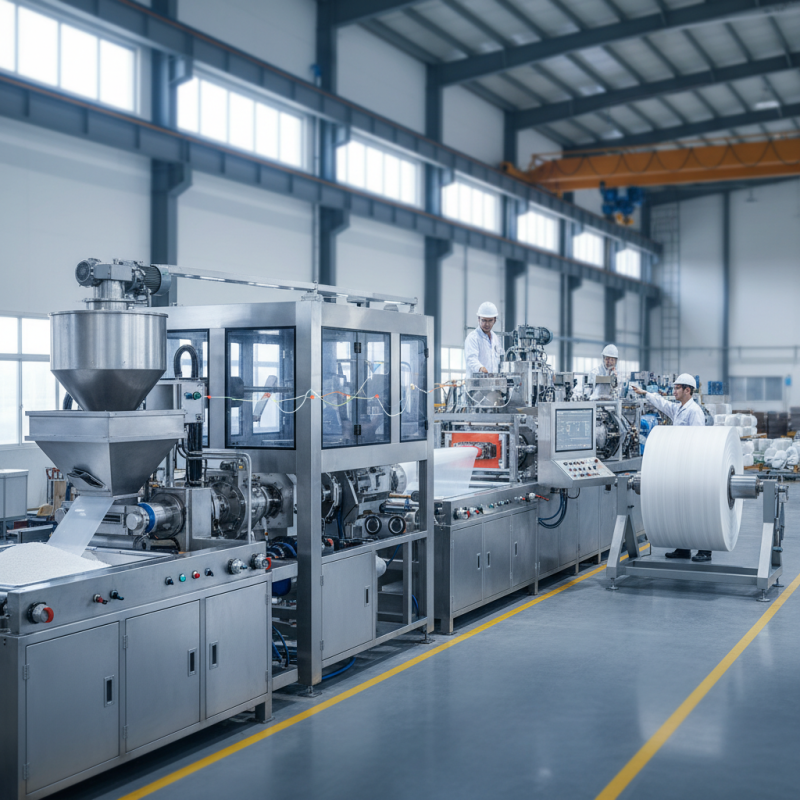
Benefits of PE Extrusion Line in Modern Plastic Manufacturing Techniques
The PE extrusion line is vital in modern plastic manufacturing techniques. It enhances production efficiency. According to a report from the Plastics Industry Association, the PE extrusion sector has seen a growth rate of around 4.5% annually. This growth highlights the increasing demand for reliable and efficient plastic products.
One key advantage is the reduction in material waste. The standard waste percentage in traditional methods can reach 10%. However, with PE extrusion lines, this can drop to as low as 2%. This efficiency not only cuts costs but also supports sustainability efforts. Companies are now focusing on eco-friendly practices.
Moreover, the versatility of PE extrusion lines allows for creating various products. From film to tubing, the applications are wide-ranging. Despite these benefits, some manufacturers face challenges. The initial investment can be substantial. Additionally, the technology requires skilled personnel to operate effectively. This can be a barrier, especially for small businesses looking to adopt advanced techniques. Balancing cost and innovation remains a critical issue in the industry.
Top Benefits of PE Extrusion Line for Efficient Plastic Manufacturing
| Benefit |
Description |
Impact |
| Cost Efficiency |
Reduces material waste and operational costs through optimized processes. |
Increases profit margins and competitiveness. |
| Versatility |
Can produce a wide range of products and profiles, from pipes to sheets. |
Allows customization for various market needs. |
| High Efficiency |
Cuts production times with continuous processing capabilities. |
Enhances throughput and accelerates market entry. |
| Quality Consistency |
Ensures uniform product characteristics through controlled extrusion parameters. |
Improves customer satisfaction and reduces returns. |
| Environmentally Friendly |
Utilizes recyclable materials and promotes low energy consumption processes. |
Aligns with sustainability goals and regulations. |
Understanding the Efficiency of PE Extrusion Lines in Production Rates
PE extrusion lines play a vital role in plastic manufacturing. They significantly enhance production efficiency. In a recent industry report, the average output of a PE extrusion line ranges from 300 to 800 kg/h. This high production rate allows manufacturers to meet growing market demands. Additionally, these lines can operate continuously, reducing downtime and labor costs.
One key aspect of PE extrusion lines is their versatility. They can produce various products, from packaging films to pipes. This adaptability means manufacturers can respond quickly to market changes. However, not all operations effectively utilize this potential. A study indicated that approximately 20% of production capacity is often wasted due to inefficiencies. This presents an opportunity for improvement.
Moreover, energy consumption is a crucial factor. PE extrusion can be energy-intensive. Reports reveal that optimizing the extrusion process can reduce energy costs by up to 30%. Implementing energy-efficient practices is essential for long-term sustainability. Manufacturers must continuously assess their operations. There’s always room for refining processes and enhancing efficiency in plastic production.
Cost-Effectiveness of Using PE Extrusion Lines in Large Scale Operations
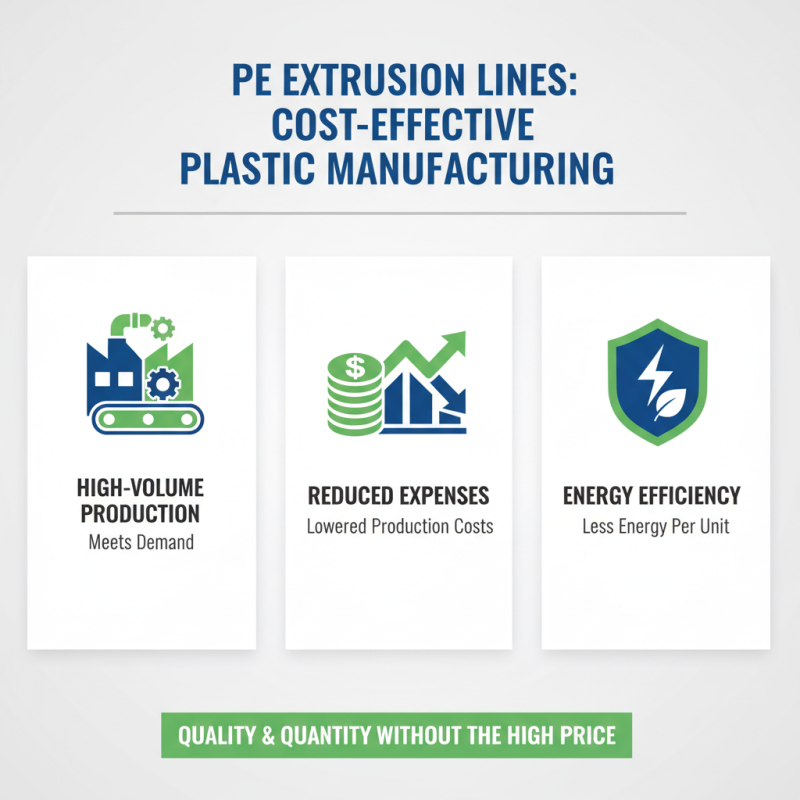
In large-scale plastic manufacturing, PE extrusion lines stand out for their cost-effectiveness. They allow for high-volume production while maintaining quality. This means businesses can meet demand without drastically increasing expenses. The machines operate efficiently, reducing the energy needed per unit produced. This helps lower overall production costs significantly.
However, there are challenges with these lines. Initial setup costs can be high, and maintenance is crucial for lasting efficiency. Companies must ensure they invest in proper training for operators. Neglecting these areas can lead to downtime and increased costs. It's important to regularly evaluate the production process to identify inefficiencies that may arise. Even with advanced technology, continuous improvement efforts are necessary to maximize benefits.
Incorporating PE extrusion lines isn't just about immediate gains. It's also about long-term planning. Understanding market needs and production capabilities is essential. These lines can adapt, but only if the manufacturing process evolves alongside them. Businesses should not overlook the importance of flexibility in production techniques. This adaptability can make a significant difference in maintaining cost efficiency.
Improving Product Quality Through Advanced PE Extrusion Technologies
The advanced PE extrusion technologies play a crucial role in enhancing product quality. By utilizing high-precision equipment, manufacturers can achieve more consistent wall thickness in extruded products. This consistency reduces material wastage and improves overall production efficiency. For example, thin-walled tubes can maintain their integrity under various conditions, ensuring reliability for end-users.
Moreover, these technologies offer flexible settings that cater to specific product requirements. Adjusting temperatures and feed rates can influence the final product's mechanical properties. However, precision is essential; slight deviations can lead to defects. It’s important to monitor these parameters closely during production.
While advancements promise better quality, there are challenges. Not all materials respond the same way to new technologies. Experimentation is often necessary to find the optimal settings. This can lead to delays and potential waste. Understanding these nuances is vital for consistent results in PE extrusion processes.
Environmental Impact Reduction with Sustainable PE Extrusion Practices
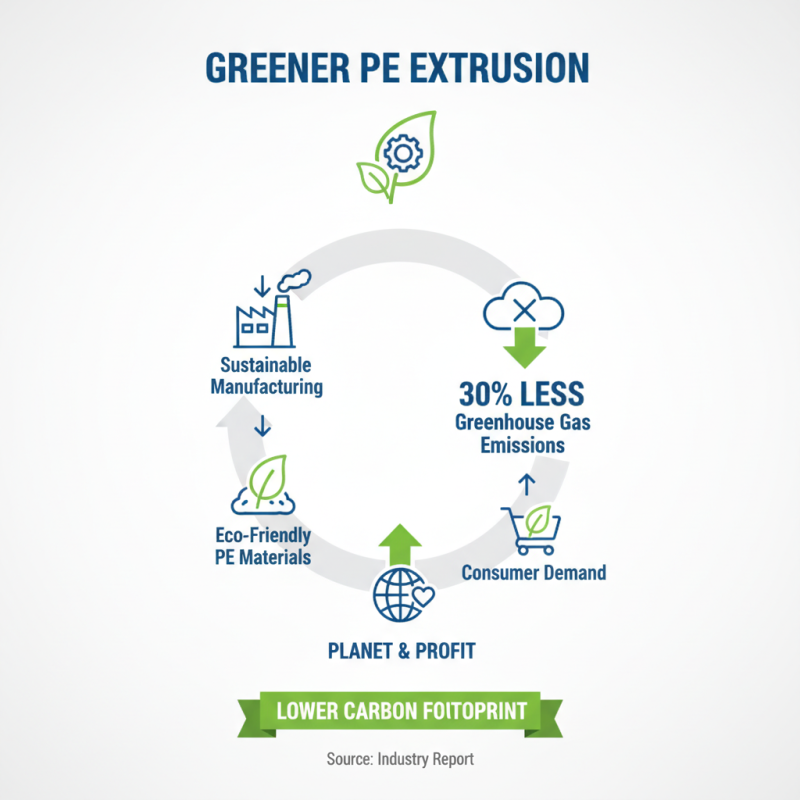
The environmental benefits of PE extrusion practices are noteworthy. Many manufacturers are now adopting sustainable approaches to reduce their carbon footprints. According to a recent industry report, switching to eco-friendly PE materials can lower greenhouse gas emissions by up to 30%. This shift not only helps the planet but also aligns with consumer demand for greener products.
Manufacturing processes that focus on sustainability can lead to significant waste reduction. An estimated 15% of plastic waste could be avoided with improved extrusion lines. These lines are designed to minimize excess material while maximizing throughput. However, challenges remain. Often, companies grapple with the costs of transitioning to these advanced systems. The initial investments may deter businesses, yet the long-term savings are substantial.
In addition, energy consumption is a pressing issue. PE extrusion lines that utilize renewable energy sources can decrease overall energy use by about 20%. This not only cuts costs but also supports sustainability goals. Nevertheless, the industry needs to rethink its approach. The existing infrastructure might not be ready for this change. Incremental improvements and collaborations across the sector can bridge this gap effectively.