2026 Best Automated Packaging Machine for Global Buyers?
The rise of the automated packaging machine industry has transformed manufacturing and distribution sectors worldwide. According to the latest research by PMMI, the Association for Packaging and Processing Technologies, the global packaging machinery market is projected to reach $50 billion by 2026. Factors driving this growth include the demand for efficiency and precision in packaging processes. Companies are increasingly adopting automation to reduce human error and operational costs.
Automated packaging machines improve productivity and speed. They can package products at a rate unmatched by manual processes. Industry experts indicate that automation can enhance accuracy, leading to reduced waste and higher quality assurance. However, the initial investment can be significant, raising concerns for smaller enterprises. There are challenges linked with integration into existing systems.
Moreover, navigating the variety of available technologies can be daunting for buyers. Not all automated packaging machines meet every need. The choice depends on product type, packaging material, and production volume. Understanding these nuances is essential to making informed decisions. As the demand for sustainability grows, packaging solutions must also evolve. Balancing automation with eco-friendly practices presents both a challenge and an opportunity for future advancements.
Overview of Automated Packaging Machines in 2026
In 2026, automated packaging machines are pivotal for various industries. Data shows that the global market for these machines is projected to reach $60 billion by 2026. This growth is driven by increasing demand for efficiency and consistency in packaging processes. Companies are turning to automation to minimize human error and reduce labor costs.
However, challenges remain. Many small to medium-sized enterprises struggle with the initial investment in automation technology. The integration of advanced systems can be daunting. Additionally, training staff to operate these systems poses a significant hurdle. A recent report from the Packaging Machinery Manufacturers Institute highlights that 40% of companies surveyed faced operational setbacks due to insufficient training.
On the other hand, the benefits of automated machines are considerable. They enhance production speed and improve product quality. Companies report a 30% reduction in packaging time by adopting automated solutions. Such machines can handle a variety of materials, making them versatile for different sectors. As the market evolves, embracing change will be essential for staying competitive.
Key Features to Consider in Modern Packaging Automation
When choosing the best automated packaging machine for your needs, consider several key features. Speed is vital in packaging. A machine that can handle more units per hour can significantly enhance productivity. However, speed shouldn’t compromise accuracy. Ensuring each package is properly sealed and labeled is crucial. Machines with integrated quality control systems can provide a safety net.
Reliability is another essential factor. Look for machines constructed from durable materials that require minimal maintenance. Downtime can lead to losses, so investing in reliable technology is worthwhile. User-friendly interfaces also boost the effectiveness of training sessions. Simple controls ensure a smooth transition for your staff.
**Tips:** Regular maintenance checks can prolong the machine’s life. Also, consider the machine's adaptability for different packaging types. Each packaging solution should be assessed for flexibility and future needs. Investing in technology that can scale will save money over time.
2026 Best Automated Packaging Machine for Global Buyers
| Feature |
Description |
Importance |
Typical Industry Use |
| Speed |
The processing speed of the machine, measured in packages per minute. |
High |
Food and Beverage |
| Flexibility |
Ability to handle various package sizes and types without extensive changeovers. |
Medium |
Consumer Electronics |
| Automation Level |
Degree of automation in the packaging process, from semi-automatic to fully automatic systems. |
High |
Pharmaceuticals |
| Maintenance Ease |
Simplified maintenance processes that reduce downtime. |
Medium |
Logistics |
| Energy Efficiency |
The energy consumption of the machine during operation. |
High |
Sustainability-focused Industries |
| Smart Technology Integration |
Incorporation of IoT and machine learning for improved performance. |
High |
E-Commerce |
Top Automated Packaging Machine Brands for Global Buyers
The automated packaging machine industry continues to evolve rapidly. In fact, a recent report from MarketsandMarkets predicts a compound annual growth rate (CAGR) of 10.4% from 2021 to 2026. This growth highlights the increasing demand for efficiency and innovation in packaging solutions across sectors.
Several leading brands are noted for their advanced technology in this space. High-speed machines, capable of filling and sealing at competitive rates, are becoming standard. For instance, the adoption of IoT in machinery is enhancing operational efficiency. These machines often feature real-time monitoring, reducing downtime drastically. Data suggests that integrating smart technologies can improve packaging line efficiency by up to 20%.
However, challenges remain. Many companies struggle with the initial investment required for high-quality machines. The complexity of these systems can also lead to operational difficulties. Consistent training for staff is essential, but often overlooked. Identifying the right machine to meet specific production needs is not always straightforward. As the market grows, buyers must approach decisions with careful consideration and reliable research to ensure optimal choices.
Cost Comparison of Leading Automated Packaging Solutions
As automated packaging solutions continue to evolve, a cost comparison becomes essential for global buyers. Evaluating various machines can clarify the investment required. A range of options is available, from basic models to advanced systems featuring AI integrations. The price points vary significantly, influenced by factors such as production speed, versatility, and included technology.
When analyzing costs, consider the long-term savings potential. High-capacity machines may have higher upfront costs but can reduce labor expenses and increase output. They also minimize material waste, which is a critical factor in today's eco-conscious market. However, not all businesses need top-tier solutions. Smaller companies might find sufficient performance in mid-range machines that fit their budget without sacrificing too much efficiency.
Reflecting on costs alone may lead to missing broader implications. Automation is not just about numbers; it’s about transforming operations. A lower price tag can equal higher maintenance expenses over time. Buyers must weigh initial finance against ongoing operational costs to assess overall value. This layered understanding is crucial for making informed decisions in a complex landscape.
2026 Best Automated Packaging Machines Cost Comparison
Future Trends in Automated Packaging Technology
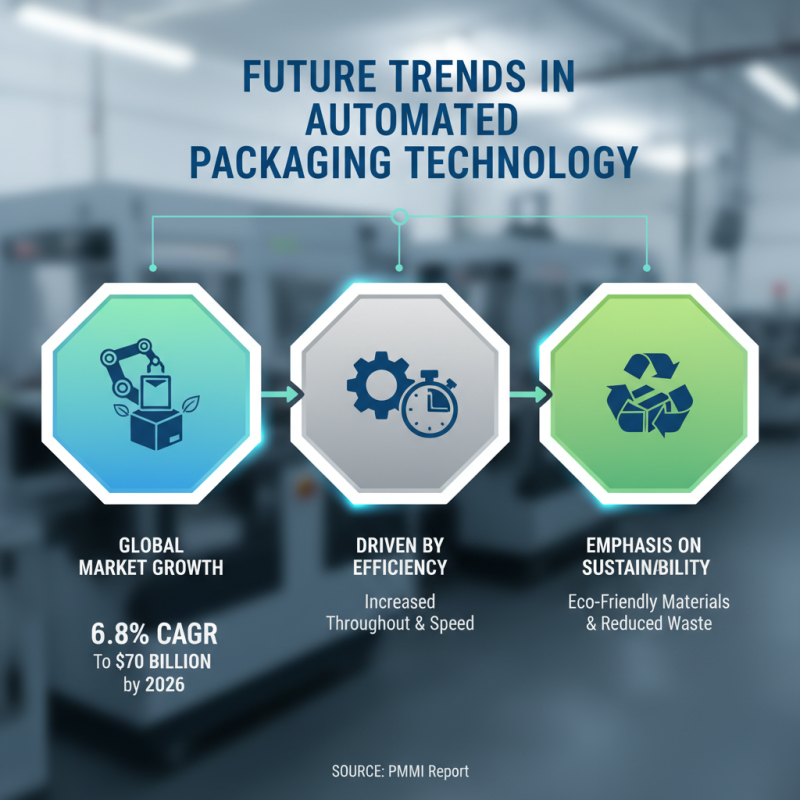
The landscape of automated packaging technology is evolving rapidly. Recent data from the Packaging Machinery Manufacturers Institute (PMMI) highlights a projected annual growth rate of 6.8% in the global packaging machinery market, expected to reach $70 billion by 2026. This surge underscores the increasing demand for efficiency and sustainability in packaging processes.
Key trends are emerging. The integration of artificial intelligence (AI) is a major game changer. AI-driven systems enhance real-time decision-making and optimize production lines. For example, predictive maintenance technologies are reducing downtime by 20%. Moreover, the shift towards sustainable packaging materials continues to gain momentum. Companies are exploring biodegradable options, aiming to decrease plastic usage in their supply chains.
However, the industry faces challenges. The high initial cost of automated solutions can be prohibitive, especially for small enterprises. Some companies may underestimate the time required for full integration. Training workforce on new technology is essential but often overlooked. These factors can hinder the widespread adoption of automated packaging solutions. Addressing them is crucial for future growth.