China Top 10 Extrusion Line Machine Manufacturers?
China’s extrusion industry has become a major manufacturing base for plastics, profiles, pipes, films, and recycling systems. PlasticsEurope reported global plastics production of approximately 413.8 million tonnes in 2023. That volume supports continuing demand for reliable processing equipment. It also explains why buyers increasingly examine Chinese suppliers beyond their advertised prices.
Grand View Research estimates that the global plastics extrusion machinery market will continue growing through 2030, driven by packaging, construction, automotive, and recycled-material applications. However, published market figures differ between research firms. Definitions vary. That limitation deserves attention.
As extrusion specialist Chris Rauwendaal has said, “Extrusion is both an art and a science.” The statement remains practical on a factory floor. A stable Extrusion Line Machine must manage melt temperature, pressure, screw speed, cooling, and material variation. A small temperature drift can create uneven profiles or surface defects. Energy consumption matters too.
This guide examines China’s top 10 Extrusion Line Machine manufacturers through practical purchasing criteria. These include product range, output stability, automation, screw and barrel engineering, quality control, export experience, spare-parts support, and commissioning service. Certifications can help, but they do not replace performance testing. A polished website proves little.
The ranking should therefore be treated as a useful starting point, not an absolute verdict. Factory audits, sample runs, reference checks, and written technical specifications remain essential. Some supplier claims are difficult to compare directly. Buyers should remain cautious. The strongest manufacturer is not always the largest one. It is the supplier that consistently delivers the required output, quality, and support under real operating conditions.
What Is an Extrusion Line Machine?
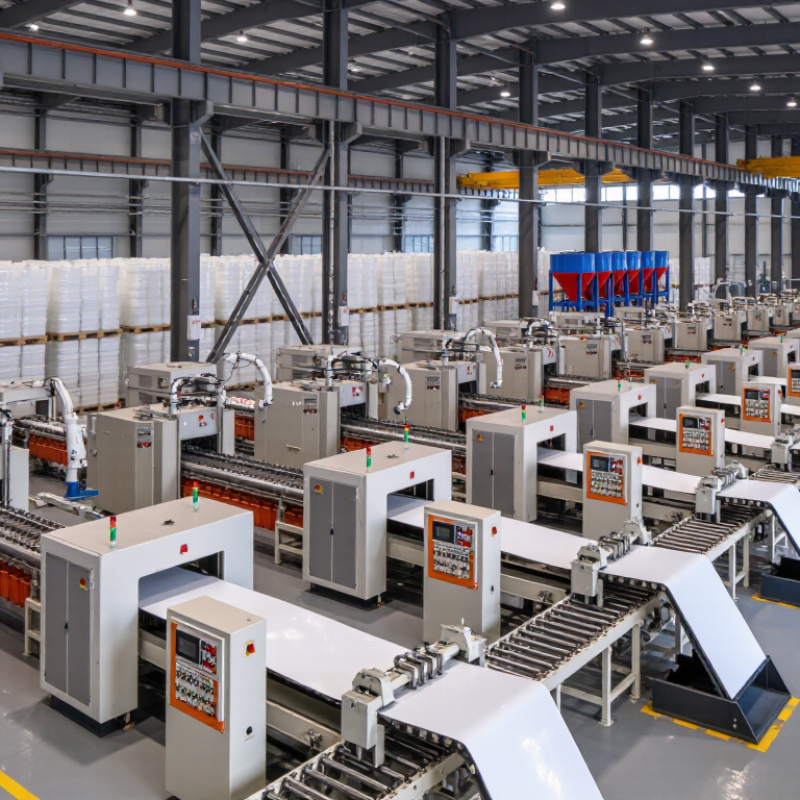
An extrusion line machine continuously transforms plastic pellets into a shaped product. The material enters through a hopper and moves along a heated barrel. Inside, a rotating screw melts, mixes, and pushes the material forward. The molten plastic then passes through a die, which determines its profile, thickness, or diameter.
A complete line may include a dryer, extruder, die, calibration table, cooling tank, haul-off unit, and cutter or winder. For pipe production, water cooling and vacuum calibration help maintain roundness. For sheet production, polished rollers control thickness and surface finish. Operators monitor barrel temperature, melt pressure, screw speed, and line speed during production. Small changes can affect strength, appearance, and dimensional accuracy.
From practical operation, stable feeding is as important as heating power. Damp material can create bubbles or a rough surface. Excessive speed may cause uneven output. No machine performs perfectly without adjustment. A reliable line should allow easy cleaning, safe access, accurate controls, and straightforward replacement of wear parts. Buyers should also examine trial-run records, energy consumption, technical training, and after-sales response. These details often matter more than impressive specifications. A careful evaluation may reveal that the cheapest line is not the lowest-cost choice.
China Top 10 Extrusion Line Machine Manufacturers? - What Is an Extrusion Line Machine?
| No. |
Extrusion Line Configuration |
Typical Materials |
Common Screw Diameter |
Typical Output |
Typical Processing Temperature |
Typical Line Speed |
Common Applications |
| 1 |
Single-Screw Pipe Extrusion Line |
PE, PP, PVC |
20–160 mm |
20–1,000 kg/h |
160–220°C |
0.5–25 m/min |
Water pipes, drainage pipes, conduit and pressure piping |
| 2 |
Twin-Screw Profile Extrusion Line |
PVC, WPC, mineral-filled compounds |
45–150 mm |
80–800 kg/h |
150–210°C |
0.5–8 m/min |
Window profiles, door frames, decking and technical profiles |
| 3 |
Plastic Film Blown Extrusion Line |
LDPE, LLDPE, HDPE, recycled PE |
45–120 mm |
30–400 kg/h |
150–230°C |
20–150 m/min |
Packaging film, agricultural film, liner film and stretch-film base |
| 4 |
Cast Film Extrusion Line |
PP, PE, EVA, TPU |
40–120 mm |
100–1,000 kg/h |
180–280°C |
50–300 m/min |
Packaging film, hygiene film, lamination film and protective film |
| 5 |
Sheet Extrusion Line |
ABS, HIPS, PET, PP, PC |
60–180 mm |
150–1,500 kg/h |
200–300°C |
1–30 m/min |
Thermoforming sheet, packaging sheet, automotive panels and signage |
| 6 |
Extruded Board Production Line |
PVC, PE, PP, PS, recycled polymers |
80–200 mm |
300–2,000 kg/h |
170–260°C |
0.5–8 m/min |
Construction boards, advertising boards, pallets and protective panels |
| 7 |
Cable and Wire Coating Line |
PVC, PE, XLPE, TPU |
30–120 mm |
20–500 kg/h |
150–300°C |
50–1,000 m/min |
Electrical insulation, communication cable and automotive wire coating |
| 8 |
Compounding and Pelletizing Line |
Engineering plastics, masterbatch and filled polymers |
20–135 mm |
20–2,000 kg/h |
180–350°C |
Process-dependent |
Color concentrates, glass-fiber compounds, flame-retardant compounds and recycled pellets |
| 9 |
PET Strap Extrusion Line |
PET flakes, virgin PET and recycled PET |
75–150 mm |
80–600 kg/h |
250–290°C |
80–250 m/min |
Packaging strap for logistics, construction materials and industrial loads |
| 10 |
Filament Extrusion Line |
PLA, ABS, PETG, PA and TPU |
20–50 mm |
1–30 kg/h |
170–280°C |
10–100 m/min |
3D-printing filament, brush filament and technical monofilament |
The values shown are typical industrial ranges rather than guaranteed machine specifications. Actual output, temperature, speed and screw dimensions depend on the polymer grade, product dimensions, die design, cooling system, haul-off equipment and required quality standards.
How to Evaluate Extrusion Line Machine Manufacturers in China
China’s extrusion equipment market deserves careful technical comparison, not a simple ranking. Grand View Research estimated the global plastics extrusion machine market at about USD 7.1 billion in 2023, with continued growth expected through 2030. This demand attracts capable suppliers, but also uneven engineering quality.
Evaluate the manufacturer’s process experience first. Ask for verified output data, not brochure figures. A serious supplier should provide melt temperature, pressure stability, energy consumption, and thickness tolerance from a factory acceptance test. For example, compare kilowatt-hours per kilogram during a defined production trial. Inspect screw design, barrel alloy, heater control, cooling layout, and electrical safety documentation. ISO certification helps, but it does not prove extrusion performance.
After-sales evidence matters more than polished websites. Request customer references using similar polymers, die widths, and production speeds. Check response times, spare-part availability, software support, and installation records. The European Commission’s Energy Efficiency data shows that industrial motors and process systems can represent substantial operating costs, so evaluate the complete line, not only the purchase price. A lower quotation may conceal unstable feeding, frequent filter changes, or expensive downtime. I would also audit weld quality and assembly discipline in person. My own evaluation would remain cautious: one successful sample run is useful, but it cannot represent a machine’s full service life.
China’s Top 10 Extrusion Line Machine Manufacturers
China’s Top 10 Extrusion Line Machine Manufacturers are competing through engineering depth, not only production scale. Industry reports from Grand View Research estimate the global plastics extrusion machinery market will expand at roughly 4% annually through 2030. This growth reflects demand for packaging film, pipes, profiles, and recycled materials. Chinese manufacturers increasingly offer complete lines with twin-screw extruders, automatic feeders, melt filtration, and inline monitoring. In practical factory trials, stable melt pressure often matters more than the highest advertised output. A line producing 500 kilograms per hour is useless if thickness variation causes frequent material waste.
Technical evaluation should examine screw geometry, motor efficiency, temperature control, and maintenance access. Mordor Intelligence identifies energy efficiency and automation as major market drivers. A modern line may reduce manual adjustments through PLC controls and gravimetric dosing. However, brochures rarely show performance during material changes or humid production conditions. Buyers should request test records using comparable resin, moisture levels, and target throughput. Ask for noise readings, power consumption per kilogram, and spare-parts lead times. Small details matter.
Experience also exposes weaknesses. Some suppliers provide excellent commissioning but weaker long-term service coverage. Others deliver robust hardware with confusing software interfaces. The strongest manufacturers among China’s top ten usually combine documented factory testing, trained engineers, and measurable after-sales response times. Independent audits and sample production remain essential. No ranking should rely on export volume alone. That would be too simple.
Key Products and Technologies Offered by Leading Manufacturers
China’s leading extrusion line manufacturers typically offer complete systems for pipes, profiles, sheets, films, and cable compounds. Their core products include single-screw and twin-screw extruders, automatic feeding units, pelletizers, haul-off machines, and cutting equipment. Modern lines often use gravimetric dosing, servo-driven control, and digital temperature monitoring. These technologies help maintain stable output when raw material moisture or density changes.
For pipe production, vacuum calibration tanks and precise cooling systems improve roundness and surface quality. Sheet lines may include automatic thickness control, polishing rollers, and online inspection cameras. Energy-saving motors can reduce operating costs, but efficiency claims should be checked against actual production data. No line is perfect. In real factories, small temperature differences still affect color, pressure, and dimensional accuracy. Buyers should review test-run records, maintenance access, spare-part availability, and operator training before signing a purchase agreement.
Tips: Ask for a sample trial using your own material. Check melt pressure stability, output per hour, noise levels, and waste rates. A cheaper machine may become expensive when calibration is slow or troubleshooting support is limited. Also, leave room for future upgrades.
How to read this chart: The ranges show representative throughput capacities commonly specified for major extrusion-line categories. Actual performance depends on polymer type, product dimensions, screw configuration, die design, cooling, and downstream equipment. The comparison is technology-focused and does not display company or brand data.
How to Choose the Right Chinese Extrusion Line Supplier
When comparing China’s top ten extrusion line machine manufacturers, do not rank them by website appearance alone. The right supplier must fit your material, output, factory space, and maintenance capacity.
Ask for a complete process review before requesting a quotation. A serious supplier should discuss resin type, moisture control, screw design, temperature zones, die size, cooling, hauling, and cutting. Request tested samples from a similar production line. Measure thickness variation, surface finish, line speed, energy use, and scrap rate. Numbers matter more than promises.
Inspect the manufacturer’s engineering records and quality controls. Check whether key parts have traceable specifications and whether electrical systems meet your local requirements. Ask how technicians handle commissioning, operator training, spare parts, and remote troubleshooting. A clear response shows practical experience. A vague response is expensive later.
Visit the factory if possible. Watch a line running, not just a polished showroom demonstration. Speak with production engineers and recent customers, while remembering that references can be selective. Review the contract carefully, including acceptance testing, delivery limits, warranty scope, and response times. I have seen buyers focus too heavily on the initial price and overlook unstable output. That mistake is easy to repeat. A slightly higher investment may be wiser when it reduces downtime, waste, and difficult maintenance. Still, no supplier is perfect, so leave room for independent inspection and honest technical questions.