How to Choose the Right Automated Shrink Wrap Machines for Your Business?
In today's fast-paced market, choosing the right Automated Shrink Wrap Machines is vital for business success. Research shows that the shrink wrap industry has grown by 5.2% annually over the last five years. Companies are increasingly relying on automation to improve efficiency and reduce labor costs. However, many businesses struggle to identify the best equipment for their needs.
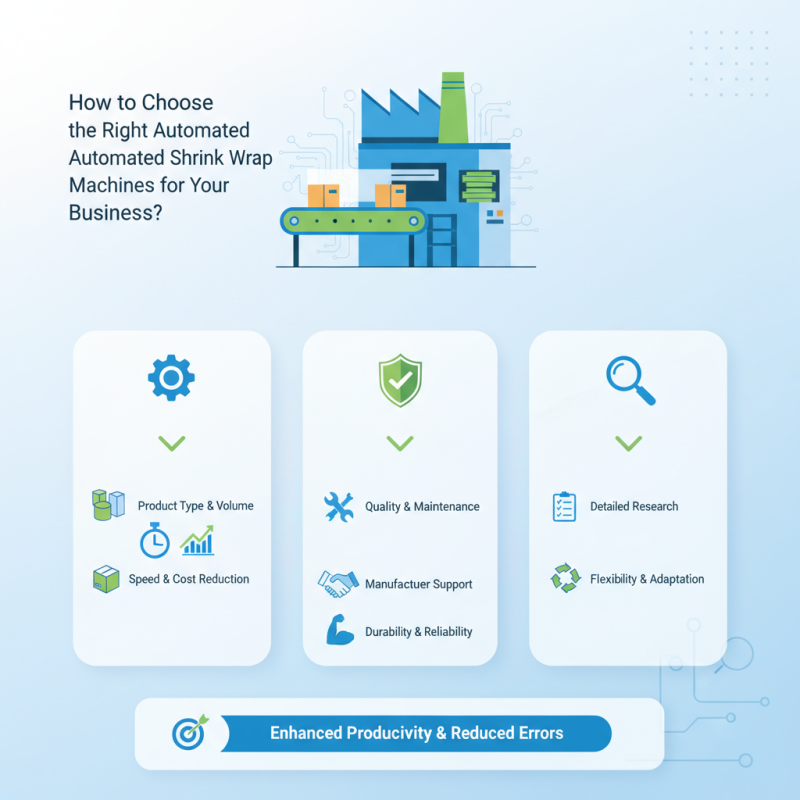
When selecting automated machines, consider the product type and volume. Different machines cater to various packaging specifications, and the wrong choice can lead to wasted resources. Additionally, industry studies indicate that 70% of businesses face challenges in maintenance and efficiency after installation. Quality and reliability are crucial, yet not all manufacturers provide the necessary support.
The choice can be overwhelming. Features like speed, durability, and flexibility require careful evaluation. Detailed research is essential, but some businesses overlook critical specifications in their decision-making process. Investing in the right Automated Shrink Wrap Machines can enhance productivity and reduce costs. Yet, without the correct information, companies risk making costly mistakes.
Understanding Automated Shrink Wrap Machines and Their Benefits
Automated shrink wrap machines play a crucial role in modern packaging processes. They provide efficient protection for products, securing them during shipping and storage. According to a report by MarketsandMarkets, the global shrink packaging market is expected to grow from USD 18.5 billion in 2020 to USD 29.7 billion by 2026. This statistic highlights the increasing reliance on shrink wrapping technology across various industries.
When evaluating automated shrink wrap machines, consider their speed and capacity. Some machines can wrap over 60 packages per minute, which can drastically reduce labor costs. However, not all businesses require high-speed machines. For smaller operations, well-functioning low-speed models may suffice. It’s essential to match the machine’s capabilities with your production needs.
Tip: Before purchasing, test machine prototypes. Understand their ease of use. Get feedback from employees who will operate them.
Another significant factor is the type of shrink film used. Different films offer varying levels of clarity, strength, and cost. A mismatch in film and machine can lead to wasted resources. Recent studies suggest that using the right film can reduce material costs by up to 15%.
Tip: Evaluate different films before making a decision. Consider durability and presentation. This could prevent costly mistakes in the long run.
Key Factors to Consider When Choosing Shrink Wrap Machines
When selecting automated shrink wrap machines, consider several key factors. The type of products to be wrapped is crucial. For instance, reports indicate that industries like food packaging and electronics often have specific requirements for film thickness and sealing methods. Understanding the nuances of these needs can steer you toward the right equipment.
Another critical factor is machine speed. Efficiency is key in high-demand environments. Data shows that high-speed machines can achieve output rates of up to 20 packages per minute. However, evaluate your production rate needs carefully. An overspeed machine might lead to frequent jams and wasted materials, dampening overall productivity.
Don't overlook ease of use and maintenance. Operators need a user-friendly interface, especially in fast-paced settings. Regular maintenance schedules can prevent machine downtime. Some organizations report that neglecting this aspect leads to increased costs and inefficiency. Always weigh the initial investment against potential long-term operational issues.
Factors to Consider When Choosing Automated Shrink Wrap Machines
Comparing Different Types of Shrink Wrap Machines Available
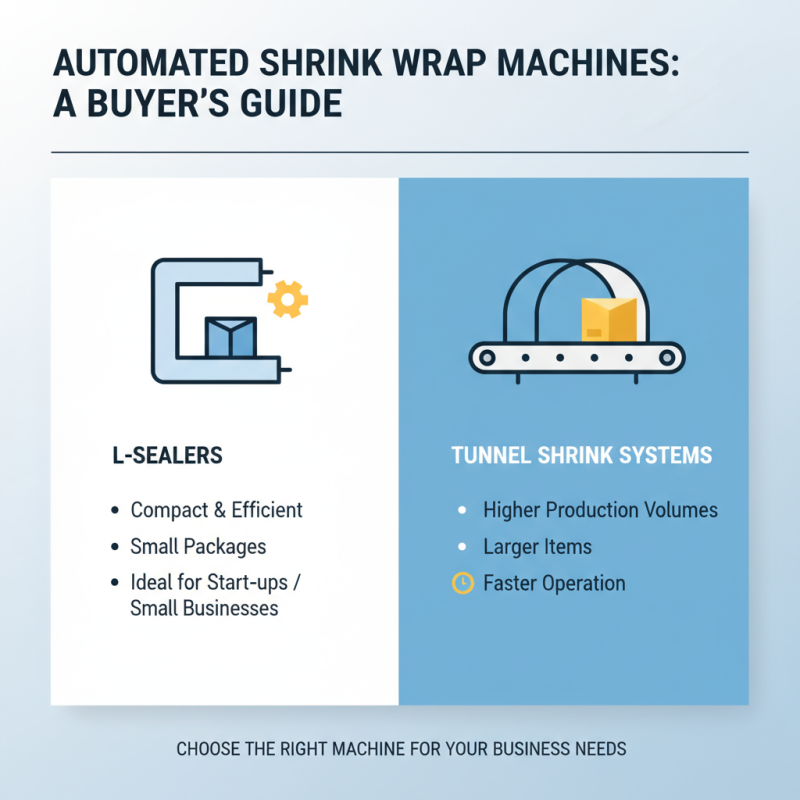
When selecting an automated shrink wrap machine, it's essential to understand the different types available. Each type serves a unique purpose and suits various business needs. For example, there are L-sealers, which are compact and efficient for small packages. They are often suitable for start-ups and small businesses. Then you have tunnel shrink systems, which are ideal for higher production volumes and larger items. These offer faster operation but require more floor space.
Another option is the semi-automatic machines. They combine flexibility with speed. Operators can handle various package sizes, making them versatile yet a bit slower compared to fully automated machines. Careful assessment of package types and production speeds is needed. You might find that a more significant investment in fully automated machines saves time in the long run, but it may not be viable for every business. Reflect on your current needs versus future growth—this decision can shape your efficiency and profitability.
Assessing Your Business Needs for Size and Volume Requirements
When assessing your business needs for shrink wrap machines, size and volume are crucial. Start by analyzing your products. Measure each item's dimensions carefully. Consider the packaging process. Are you wrapping large boxes or small items? This decision will guide your choice.
Volume is another key aspect. How many units do you pack daily? If you have a high output, a faster machine may be required. Think about your workflow. Will the machine integrate smoothly with current operations? Sometimes, companies purchase a machine that’s too large or too small. This mismatch can lead to inefficiency.
Evaluate your future growth as well. Will your product line expand? Plan for flexibility in your equipment choices. It’s important to reflect on your needs regularly. Trends fluctuate, and so should your approach. Prioritize machines that can adapt to changes. Consider both current and future demands.
Evaluating Budget and Maintenance Costs for Shrink Wrap Equipment
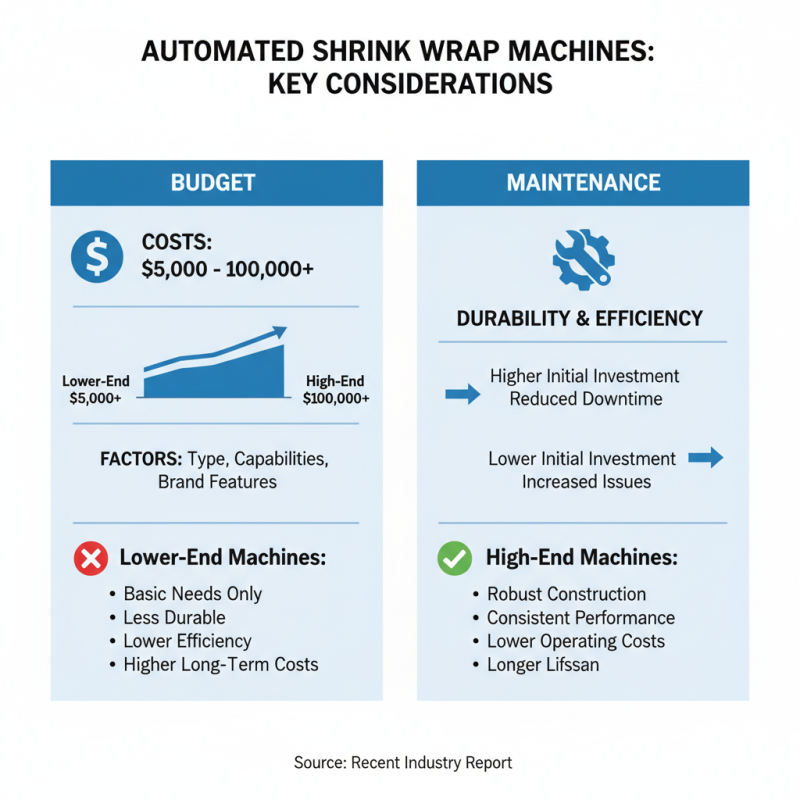
When selecting automated shrink wrap machines, budget and maintenance are crucial. According to a recent industry report, costs can range from $5,000 to $100,000. This wide range reflects differences in machinery types, capabilities, and brand features. A lower-end machine can meet basic needs. However, durability and efficiency often suffer, leading to higher long-term costs.
Maintenance costs also vary significantly. Routine upkeep is essential for optimal performance. Statistics show maintenance might range from 8% to 15% of the initial machine cost annually. Neglecting maintenance can result in malfunction, increasing downtime. This can be costly for businesses relying on efficiency.
Investing in quality equipment may seem expensive. However, higher upfront costs can lead to long-term savings. A durable machine typically requires fewer repairs and less frequent replacements. Inadequate budgeting for maintenance can drain resources unexpectedly. Consider both purchase prices and ongoing costs when selecting equipment.