Leave Your Message

How to Choose an Automated Packaging Machine?

Choosing an Automated Packaging Machine is not simply a matter of selecting the fastest model. It is a decision about product protection, operator safety, production consistency, and future growth. A machine that handles fragile bottles may fail with dusty powders or irregular cartons. Small details matter. Film tension. Seal temperature. Conveyor spacing.

Packaging educator Sterling Anthony defines packaging as “the technology of enclosing and protecting products for distribution, storage, sale, and use.” This principle remains useful when comparing modern automation. The right machine should protect the product while fitting the complete production environment. Buyers should examine package dimensions, material types, output targets, changeover frequency, cleaning requirements, and available floor space. A shiny machine is not automatically a suitable machine.

Real operating conditions reveal more than a brochure. Ask suppliers to test your actual products and packaging materials. Observe rejected packs, seal quality, noise, access points, and adjustment time. Review training, spare-parts availability, software support, and preventive-maintenance procedures. These factors influence reliability long after installation.

There is no perfect machine.

A cautious buyer should also calculate total cost of ownership. Energy use, labor, downtime, tooling, and maintenance can outweigh the purchase price. It is easy to underestimate changeovers or overestimate capacity. I would question any promise based only on ideal samples. A dependable Automated Packaging Machine should deliver stable performance during ordinary shifts, not just impressive demonstrations. This guide explains the practical criteria that can help businesses choose with greater confidence, while recognizing that every application has limitations.

How to Choose an Automated Packaging Machine?

What an Automated Packaging Machine Does and Where It Is Used

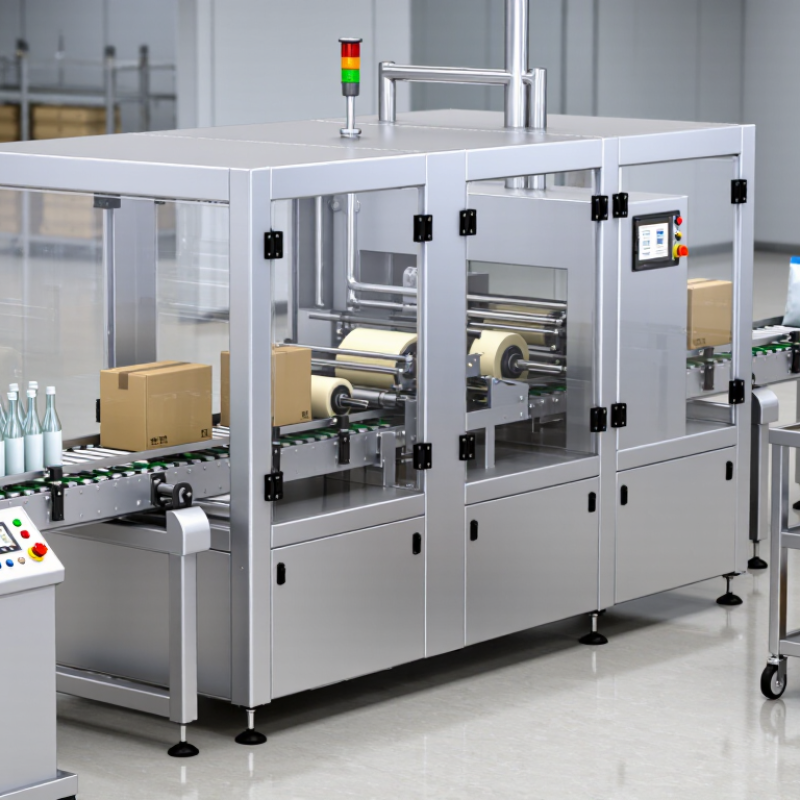
An automated packaging machine coordinates feeding, filling, sealing, labeling, inspection, and sometimes palletizing. Sensors check product position, film tension, seal temperature, and missing labels. A carton may enter empty, receive ten units, close, and leave with a readable code within seconds. It reduces repetitive handling and improves batch consistency, but it cannot repair poor product design.

Where is it used? Food and beverage plants need hygienic surfaces, quick washdown, and accurate portion control. Pharmaceutical facilities require traceability, controlled environments, and reliable vision inspection. Personal-care, household-goods, and e-commerce operations often prioritize flexible formats and rapid changeovers. Grand View Research valued the global automated packaging machine market at about USD 52.94 billion in 2023, projecting a 5.9% compound annual growth rate through 2030. The International Federation of Robotics also reported 4,281,585 industrial robots operating worldwide in 2023, showing broader automation momentum.

Choosing equipment requires more than comparing speed. Match the machine to package dimensions, materials, product behavior, line space, and cleaning requirements. Check realistic output, not only the advertised maximum. A 120-package-per-minute machine may slow sharply during film changes or small-batch production. PMMI’s 2024 State of the Industry reporting identified labor availability and automation investment as continuing industry pressures. Yet automation is not automatically economical. Include maintenance, spare parts, training, energy use, software integration, and changeover time in the calculation. Sometimes a simpler semi-automatic line is the wiser choice.

How to Define Your Product, Packaging, and Production Requirements

How to Choose an Automated Packaging Machine?

How to Define Your Product, Packaging, and Production Requirements

Begin with the product, not the machine. Record its weight, dimensions, moisture, temperature, fragility, and flow behavior. Powder, liquid, granules, and irregular pieces require different dosing methods. Measure real batches, because laboratory samples can behave too perfectly. A dusty powder may bridge inside a hopper, while sticky material may slow the filling cycle. Test the awkward parts.

Define the package in practical terms. Specify the material, pouch or container shape, sealing area, label position, and acceptable leakage rate. Check whether the packaging contacts food, medicine, or another regulated product. Confirm applicable safety and material requirements in every sales region. Film thickness also matters. A small change can affect sealing temperature, tension, and waste. Keep sample packages from different suppliers for machine trials.

Production data should reflect normal work, not an optimistic target. Record units per minute, batch size, daily operating hours, planned product changes, and available floor space. Include electricity, compressed air, cleaning access, and operator movement. A line running at 100 units per minute may fail if changeovers take forty minutes. Build in inspection points for weight, seal quality, coding, and rejected packs. Use verified measurements, not guesses. Requirements often change after the first trial, and that is acceptable. A clear revision history helps engineers select suitable dosing, feeding, sealing, and control systems without overbuilding the line.

Which Machine Types Match Different Packaging Processes

Choosing an automated packaging machine starts with the packaging process, not the machine name. In packaging line assessments, I examine the product, package format, output target, and available floor space. A dry powder may require an auger filler, while granular products often suit a weighing system. Liquids need controlled pumps and cleanable contact parts. Small differences matter.

Vertical form-fill-seal machines create bags from a continuous film roll. They fit snacks, grains, powders, and other free-flowing products.

Horizontal form-fill-seal machines work well for bars, baked goods, and individually wrapped items. Their in-line movement protects delicate products more gently.

Premade pouch machines suit businesses needing stronger presentation or multiple pouch shapes. They usually require more precise pouch feeding.

Cartoning machines match products that need boxes, such as bottles, tubes, or pouches. A filling and capping system is more suitable for liquids in rigid containers. For dusty products, enclosed transfer points and dust extraction can reduce cleaning problems. Check seal temperature, film width, product weight, and changeover time before approval. A machine that runs quickly may still waste material during frequent format changes. No selection is perfect. Pilot testing is essential. I would measure seal strength, fill accuracy, rejected packs, noise, and operator access during a real production trial. One overlooked issue is maintenance space; a compact machine can become difficult to service when installed tightly.

How to Compare Machine Capacity, Compatibility, and Automation Features

Choosing an automated packaging machine starts with measured capacity, not the highest advertised speed. Compare sustained output, changeover time, and Overall Equipment Effectiveness (OEE). A machine rated at 120 packs per minute may deliver less after film changes, cleaning, and rejects. PMMI’s 2024 State of the Industry report identifies labor availability and production efficiency as major packaging investment drivers. Capacity must therefore match real shifts, not an ideal test run.

Capacity is not speed. Test the seal.

Compatibility deserves equal attention. Check product dimensions, moisture, temperature, package weight, film structure, and sealing range. Ask suppliers to run your actual materials and record startup waste. The Flexible Packaging Association reports that flexible packaging represented about 21% of the U.S. packaging market by value in 2023, showing why film handling and seal consistency matter. Still, one material trial is not enough. Seasonal products can behave differently. This is easy to underestimate.

Review automation features by their practical value. Servo-controlled dosing, automatic film tracking, vision inspection, reject confirmation, and production data logging can reduce variation. The International Federation of Robotics reported 541,302 industrial robots installed worldwide in 2023, reflecting wider automation adoption across manufacturing. Yet more automation can increase maintenance complexity. Check diagnostic access, operator training, spare-part availability, and cybersecurity controls. During acceptance testing, compare waste rate, changeover minutes, and verified output against your own baseline. A polished demonstration can mislead. Your worst product often reveals the better machine.

How to Evaluate Safety, Maintenance, Costs, and Supplier Support

How to Choose an Automated Packaging Machine?

Safety should be evaluated before speed or purchase price. Check guarding, interlocks, emergency stops, safe access, and documented risk assessments. The machine should support lockout procedures and clear operator training. OSHA identifies machine guarding as a critical control for preventing injuries near moving equipment. Ask for factory acceptance testing and site validation records. Do not accept “standard compliance” without evidence.

Maintenance affects real production costs. Review mean time between failures, mean time to repair, lubrication points, sensor access, and spare-part availability. PMMI’s 2024 industry research continues to identify labor shortages as a major reason manufacturers invest in automation. However, automation can create expensive downtime when technicians lack training. Compare energy use, film waste, changeover time, service contracts, and integration costs. The cheapest quote may not be the lowest total cost. This is easy to overlook.

Tips: Request a three-year ownership estimate. Include utilities, software updates, spare parts, training, and planned downtime. Ask the supplier for response-time commitments, remote diagnostic limits, escalation contacts, and local service coverage. Review customer references with similar packaging formats. IFR reported 541,302 industrial robot installations worldwide in 2023, showing strong automation growth, but adoption alone does not guarantee reliability. Challenge every assumption. One spreadsheet is not enough. A live production trial may reveal awkward access, noisy operation, or changeover steps that sales demonstrations hide.

How to Choose an Automated Packaging Machine? - How to Evaluate Safety, Maintenance, Costs, and Supplier Support

Evaluation Dimension What to Check Recommended Benchmark Why It Matters Suggested Weight
Product and Package Fit Product characteristics, package material, dimensions, seal requirements, and changeover range Machine should run the target product and packaging materials at the required production rate without compromising seal integrity Poor product-machine compatibility can cause leakage, inaccurate filling, excessive waste, and frequent stoppages 15%
Production Capacity Rated speed, sustainable output, product giveaway, reject rate, and availability Evaluate using actual product trials; compare effective output rather than only the manufacturer’s maximum speed Maximum rated speed may not represent stable production under normal operating conditions 10%
Safety Design Guarding, interlocked doors, emergency stops, access control, safe isolation, and risk assessment Request documented risk assessment and verification against applicable requirements such as ISO 12100, ISO 13849-1, ISO 13850, ISO 14119, and IEC 60204-1 Safety systems reduce exposure to crushing, cutting, entanglement, electrical, and unexpected-start hazards 20%
Operator Safety and Ergonomics Loading height, manual handling, noise, heat, visibility, cleaning access, and control-panel usability Controls and safety devices should be accessible, clearly labeled, and suitable for the intended operators and work environment Good ergonomics reduce operator fatigue, unsafe workarounds, and avoidable production errors 5%
Routine Maintenance Lubrication points, wear parts, cleaning procedures, inspection intervals, and maintenance access Prefer tool-less access where practical, clearly documented daily checks, and planned service intervals based on operating hours Simple preventive maintenance improves uptime and lowers dependence on specialist technicians 10%
Cleaning and Hygiene Product-contact materials, drainage, crevice control, washdown requirements, and sanitation time Use materials and construction appropriate for the product, cleaning chemicals, moisture level, and applicable food or pharmaceutical requirements Poor hygienic design can increase contamination risk and extend changeover or cleaning downtime 5%
Initial Investment Machine price, tooling, controls, installation, commissioning, training, and integration Compare complete installed cost, not only the base machine quotation Ancillary equipment, guarding, conveyors, coding, inspection, and site work can materially increase the project cost 10%
Operating Cost Labor, electricity, compressed air, film or containers, spare parts, waste, and planned service Calculate total cost per saleable package over the expected production volume and service life A lower purchase price may result in a higher long-term cost through waste, downtime, or labor requirements 10%
Supplier Support Response time, local service coverage, remote diagnostics, technician availability, training, and documentation Obtain written service-level commitments, spare-parts lead times, escalation contacts, and training scope Fast technical support can significantly reduce the financial impact of unplanned downtime 10%
Spare Parts Availability Critical spare list, standard components, obsolete-part policy, stock location, and delivery time Identify critical parts before purchase and confirm realistic delivery times for local and imported components A low-cost component can still create extended downtime if it is difficult to source 5%

Indicative Machine-Type Comparison

Machine Type Typical Application Typical Speed Range* Indicative New Equipment Cost** Maintenance Characteristics Key Safety and Support Questions
Vertical Form-Fill-Seal Powders, granules, snacks, frozen products, and other free-flowing or irregular products in bags Approximately 30–120 bags/minute Approximately US$30,000–US$150,000 Regular inspection of sealing jaws, forming tube, film tracking, sensors, cutting system, and dosing equipment Check guarding around sealing and cutting areas, emergency-stop reset logic, film-threading safety, and availability of sealing components
Horizontal Form-Fill-Seal Bars, biscuits, household products, medical items, and other regularly shaped products Approximately 50–300 packs/minute Approximately US$50,000–US$250,000 Frequent checks of film registration, sealing temperature, crimping tools, product spacing, and change parts Confirm access-door interlocks, safe setup mode, quick-change tooling, recipe control, and technician response time
Premade Pouch Machine Stand-up pouches, zipper bags, spouted pouches, liquids, sauces, and premium products Approximately 20–80 pouches/minute Approximately US$40,000–US$180,000 Cleaning of grippers and filling areas, inspection of pouch magazines, vacuum systems, sealing units, and changeover parts Ask about safe access during pouch loading, liquid-spill protection, hygienic construction, and operator training for format changes
Cartoning Machine Secondary packaging of bottles, pouches, tubes, trays, and individual retail products into cartons Approximately 30–250 cartons/minute Approximately US$80,000–US$350,000 Inspection of carton magazines, vacuum generators, pick-and-place mechanisms, glue or tuck systems, and sensors Verify guarding around robotic and reciprocating motion, safe jam-clearing procedures, diagnostics, and format-part availability
Case Packer Automated loading of primary packs into shipping cases or corrugated containers Approximately 10–60 cases/minute Approximately US$100,000–US$450,000 Inspection of conveyors, case-forming tools, grippers, vacuum cups, sensors, and adhesive or tape systems Confirm robot safety zones, access interlocks, recovery after jams, integration responsibilities, and remote troubleshooting capability

*Speed ranges are indicative and vary with product properties, package dimensions, filling method, machine configuration, and quality requirements. **Cost ranges are broad planning estimates for new equipment and may exclude conveyors, inspection systems, coding, installation, integration, taxes, shipping, and site modifications.