2026 How to Optimize Palletizing Robot Applications for Your Business?
As businesses seek efficiency, optimizing Palletizing Robot Applications becomes crucial. These robots can increase throughput and reduce labor costs. However, implementing them is not always straightforward. Many companies struggle to fully utilize their automated systems.
Understanding your specific needs is key. Each production line has its peculiarities. Identify time-consuming tasks that a palletizing robot could streamline. Evaluate your current workflow and pinpoint the areas requiring improvement. Remember, not all palletizing solutions fit every scenario.
Moreover, investing in the right technology can be challenging. Balancing costs and benefits is essential. Sometimes, the performance of a palletizing robot may fall short of expectations. Continuous evaluation and adjustment may be necessary to achieve optimal results. Embrace the ongoing process of refinement to maximize the effectiveness of your Palletizing Robot Applications.
Understanding the Basics of Palletizing Robot Technology
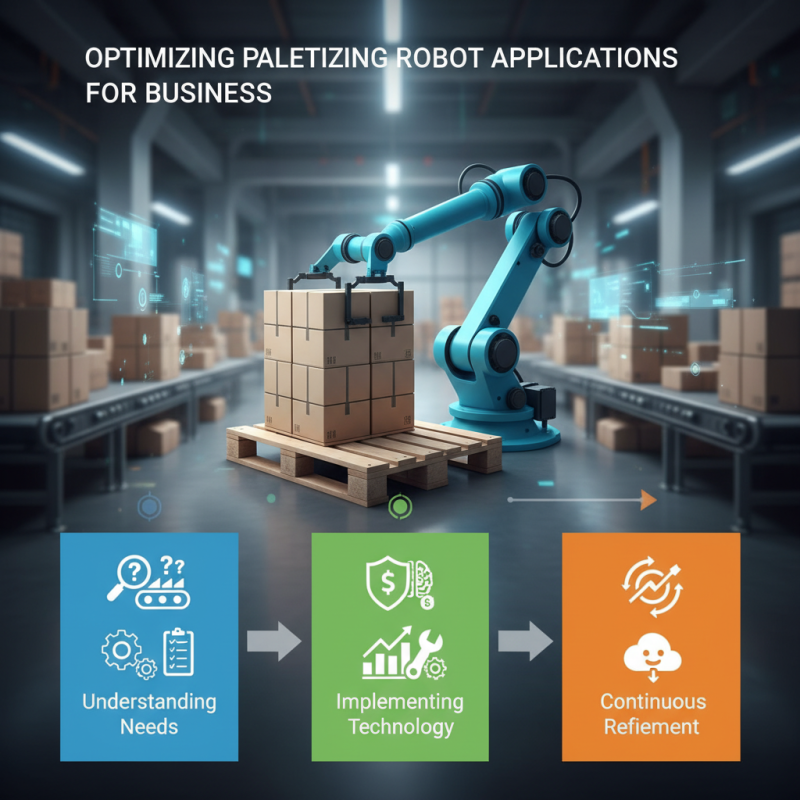
Palletizing robots are revolutionizing the way goods are handled in warehouses. These machines automate the process of stacking products onto pallets, reducing labor costs and increasing efficiency. Understanding their technology is key to maximizing their benefits. The core components include the robotic arm, end-of-arm tooling, and advanced software for controlling movements. Each element plays a crucial role in ensuring precision and speed.
However, there are challenges to consider. Not all products are easy to handle. Some may require special tooling or adjustments to the robot’s programming. For example, fragile items need gentle handling, while heavier packages may require more force. This complexity can lead to inefficiencies if not properly addressed. Companies must continually assess their operational needs.
Moreover, integrating these robots into existing processes isn’t always seamless. It often requires a significant investment of time and resources. Employees may need training to work alongside robots effectively. If companies overlook this aspect, the potential benefits might not be realized. Balancing automation and human labor is essential for a successful implementation.
Evaluating Your Business Needs for Palletizing Solutions
As businesses seek efficiency, evaluating palletizing solutions becomes crucial. In a recent report by the International Federation of Robotics, automating palletizing tasks can increase productivity by 15-30%. This statistic highlights the potential benefits for companies looking to optimize their operations.
Start by assessing your specific needs. Consider the types of products you handle. Are they uniform or varied? According to industry surveys, 70% of manufacturers still face challenges with inconsistent product dimensions. Understanding these factors can guide the right choice of palletizing technology.
Another aspect to evaluate is the return on investment (ROI). A study from the Association for Advancing Automation noted that companies saw a payback period of 1-3 years after implementing robotic systems. However, it’s essential to reflect on the integration process. Many businesses reported initial integration hurdles. There were learning curves and adaptation periods that could affect productivity. Addressing these challenges in advance can lead to smoother transitions and better results.
2026 Palletizing Robot Application Optimization
Steps to Select the Right Palletizing Robot for Your Operations
When selecting a palletizing robot for your operations, consider the unique needs of your business. Understand your product types, such as boxes or bags, and their weight. Analyze your workspace layout. Space constraints can heavily influence the type of robot you choose. Keep in mind that a less powerful robot might struggle in high-demand environments.
Tips: Always assess the compatibility of the robot with existing equipment. Does it integrate seamlessly? This is a crucial factor. Evaluate the training requirements for your staff. Some robots require more technical knowledge than others. A steep learning curve may lead to operational delays.
Think about the future of your operations. Will your robot accommodate growth or changes in product lines? An adaptable robot will save time and money in the long run. Review your budget carefully. Often, the initial cost can overshadow maintenance expenses. Make sure to allocate funds for ongoing support.
Integrating Palletizing Robots into Existing Production Lines
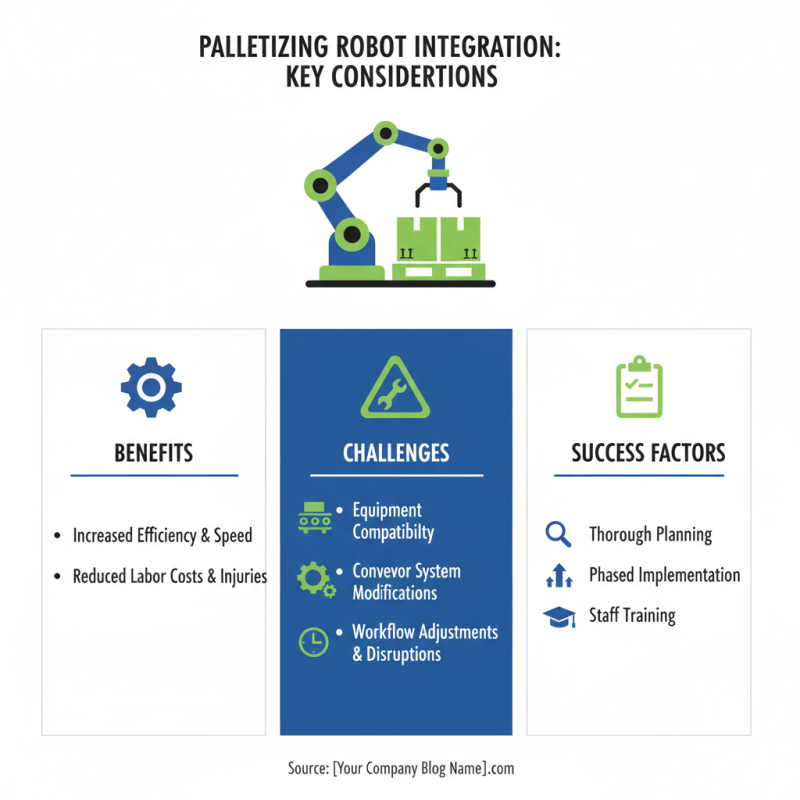
Integrating palletizing robots into existing production lines can be a game-changer for many businesses. However, this transition is not without its challenges. For instance, ensuring compatibility with current equipment is vital. Often, the integration process requires modifications to conveyor systems or adjustments to workflows. These changes can lead to disruptions if not planned properly.
Another common issue is the training of staff. Employees may find it difficult to adapt to the new automation tools. Offering hands-on training sessions can significantly help. Yet, some employees may still resist this technology. Recognizing and addressing their concerns is crucial for smoother adoption.
Additionally, monitoring the robots' performance post-integration is essential. Regular assessments can highlight inefficiencies in the robot's operation or compatibility issues. Feedback loops with the production team can provide insights for improvements. It's clear that while integrating palletizing robots can enhance efficiency, it requires careful consideration of both technology and human factors.
Best Practices for Maintaining and Upgrading Palletizing Systems
Maintaining and upgrading palletizing systems is crucial for efficiency. According to a recent industry report, 30% of facilities experience downtime due to outdated technology. Regular maintenance can prevent many issues. In fact, companies that implement a consistent maintenance schedule see a 25% reduction in unexpected breakdowns.
Upgrading your systems can lead to significant gains. Automation raises productivity by 15% to 30% on average. However, integrating new technology may not be seamless. Training staff takes time and resources. Employees need to adapt to new processes and systems or productivity could suffer. Fostering an environment of continuous learning is vital.
Additionally, the layout of the palletizing area should be regularly assessed. Inefficient layouts can waste time and resources. A study indicated that optimizing layout can boost efficiency by as much as 20%. Investing in layout redesigns can yield long-term benefits. However, it requires analysis and planning. Ignoring these factors can lead to missed opportunities and stagnant growth.
2026 How to Optimize Palletizing Robot Applications for Your Business? - Best Practices for Maintaining and Upgrading Palletizing Systems
| Dimension |
Best Practice |
Description |
Frequency |
| System Maintenance |
Regular Inspections |
Conduct thorough inspections to identify wear and tear. |
Monthly |
| Software Updates |
Firmware Upgrades |
Keep the robot's software up to date for improved performance. |
Quarterly |
| Training |
Staff Training Programs |
Provide training for staff to operate the systems efficiently. |
Bi-annually |
| Integration |
System Integration Testing |
Test integration with other systems for seamless operation. |
After Upgrades |
| Troubleshooting |
Real-Time Diagnostics |
Utilize diagnostic tools to quickly identify issues. |
On-going |