Top 10 Palletizing Robot Applications for Global Buyers?
In today's fast-paced manufacturing landscape, the demand for efficiency and precision is paramount. Businesses are increasingly turning to automation to meet these expectations. One significant innovation is the rise of palletizing robots. These machines play a crucial role in streamlining operations across various industries.
Palletizing robot applications are transforming how products are packed and shipped. They offer solutions that enhance productivity while reducing labor costs. By automating repetitive tasks, companies can focus on more strategic initiatives. However, the implementation of these robots does come with challenges. Compatibility with existing systems and the need for skilled operators can complicate the transition.
Understanding the top palletizing robot applications reveals their versatility. They cater to diverse sectors, from food and beverage to pharmaceuticals. Evaluating these applications helps businesses make informed decisions. They can discover which solutions best fit their unique needs. With the right approach, companies can harness the full potential of palletizing robots for success.
Overview of Palletizing Robots in the Global Market
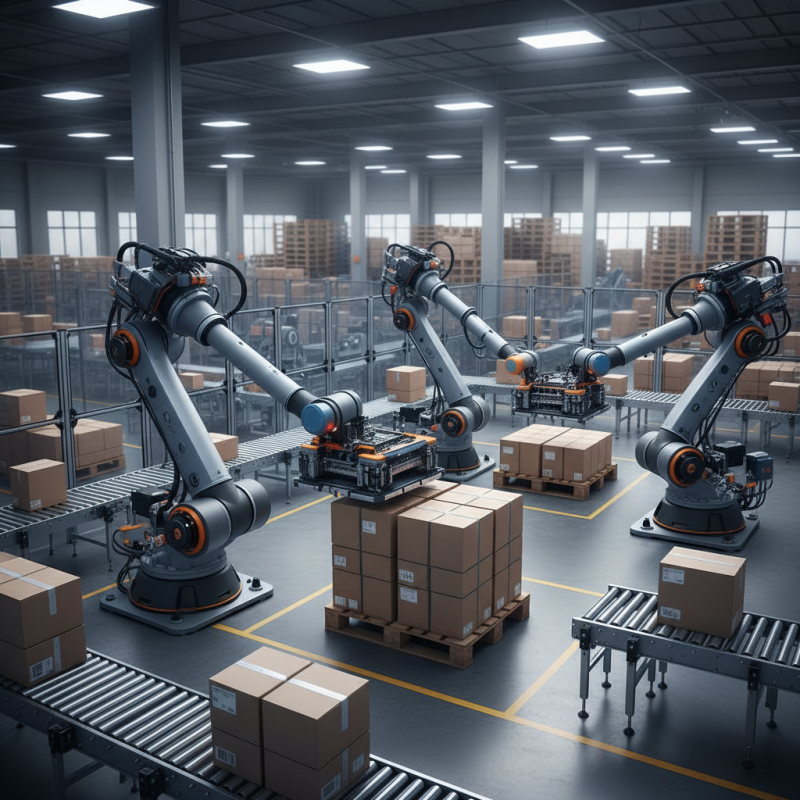
Palletizing robots play a crucial role in various industries around the world. These machines automate the process of stacking products onto pallets, improving efficiency and reducing labor costs. As global demand increases, these robots are becoming more accessible for buyers in different sectors.
One area of interest is the versatility of palletizing robots. They can handle a wide range of products, from packaged foods to heavy machinery parts. This flexibility allows businesses to enhance their production lines without major overhauls. However, potential buyers should evaluate their specific needs and consider the space available for robotic operations.
Tips: Look for solutions that offer customization. Every production line is unique, and tailored robots can maximize efficiency. Additionally, consider the robot’s speed and load capacity. These factors directly impact productivity.
One challenge in adopting palletizing robots is the learning curve associated with their operation. Staff may require training to effectively manage these machines. This investment in human resources is crucial for maximizing return. Not all robots are user-friendly, so research is essential.
Tips: Attend demonstrations whenever possible. Seeing a robot in action aids in understanding its capabilities. Gathering feedback from current users also helps in making informed decisions.
Key Features and Benefits of Palletizing Robots
Palletizing robots are transforming the logistics and manufacturing sectors. These machines streamline the packing process, reducing human error. They automate the placement of products onto pallets, which improves efficiency significantly. Often equipped with advanced sensors, these robots can adapt to various product shapes and sizes. This adaptability is crucial for industries that handle diverse items.
One key feature is their ability to operate continuously. Unlike human workers, robots can work around the clock without fatigue. Their precision ensures consistent stacking patterns, maximizing pallet space. However, the initial investment can be high. Businesses must consider return on investment before integrating these systems. Training staff to operate and maintain the robots also requires time and resources.
Safety is another consideration. While robots enhance productivity, they pose risks if not handled correctly. Workers must be educated about safe practices when interacting with robotic systems. A closer look reveals a delicate balance between efficiency and safety that organizations must navigate. Left unmanaged, the reliance on technology can lead to operational hiccups and worker dissatisfaction.
Top 10 Palletizing Robot Applications
Top Industries Utilizing Palletizing Robots
Palletizing robots are transforming various industries by enhancing efficiency and productivity. The
food and beverage sector leads the way, with
27% of palletizing robots deployed in this field. This is largely due to the need for
quick packaging speeds and the safe handling of products. According to a recent report by the
International Federation of Robotics, the growth in this sector is attributed to increased consumer demand
for packaged goods, particularly after the pandemic.
The automotive industry also heavily relies on palletizing robots. Over
15% of robots in this field are tasked with arranging parts for assembly lines. The precision
and speed of these robots ensure that production schedules are met, but human intervention is still necessary for
quality control. This highlights a potential area for improvement, as companies explore
ways to fully automate the assembly process without sacrificing quality.
Pharmaceuticals represent another significant area of application, with a
10% share. The need for meticulous organization and compliance standards drives the adoption of palletizing
robots in this industry. While robots boost efficiency, companies must reflect on their ability to adapt to strict regulatory environments.
Balancing automation with compliance can be challenging, yet it is crucial for future growth and sustainability.
Criteria for Selecting the Right Palletizing Robot
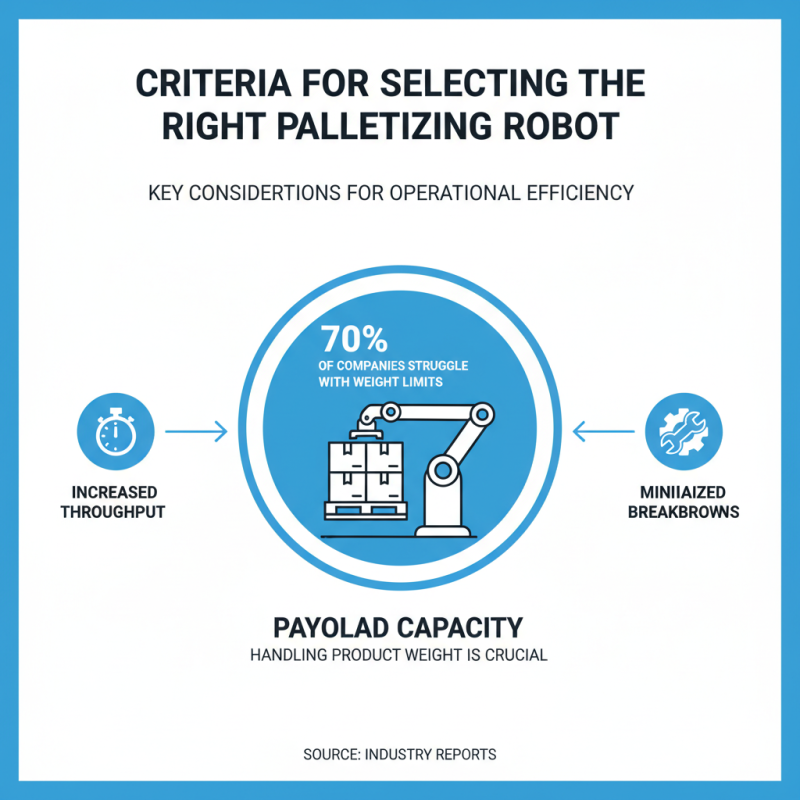
Selecting the right palletizing robot involves key criteria that can greatly influence operational efficiency. First, the robot's payload capacity is crucial. According to industry reports, nearly 70% of companies face challenges with weight limits. Ensuring that a robot can handle the weight of your products is essential. This directly impacts throughput and minimizes potential breakdowns.
Speed is another vital aspect. Many companies seek robots that operate at over 1,000 cycles per hour, which can significantly enhance productivity. However, faster is not always better. A balance between speed and accuracy is necessary. Poorly calibrated systems may lead to product spills, increasing waste and reducing efficiency.
Compatibility with existing systems is often overlooked. It’s critical to ensure seamless integration with conveyors and other machinery. A mismatch can cause costly downtime. Regular evaluations of your automated systems’ performance are advisable. According to a recent analysis, 54% of companies reported that underperforming robots needed reevaluation. Continuous assessment helps in optimizing the palletizing process.
Future Trends in Palletizing Robot Technology
The evolution of palletizing robots is at a pivotal point.
Advanced technologies are shaping the future of automation.
Artificial intelligence and machine learning are driving innovations.
These features enhance efficiency in diverse industries.
As demand rises, so does the need for flexibility in automation.
Tips: Assess your specific requirements before investing. Identify tasks suitable for automation.
This will ensure successful integration.
Another trend is the use of collaborative robots or cobots.
They safely operate alongside human workers.
This collaborative approach improves productivity without compromising safety.
Companies are increasingly adopting cobots in their production lines.
Tips: Monitor your existing workflow.
Consider how cobots can enhance tasks without disrupting operations.
Data analytics is also becoming crucial.
It enables real-time monitoring of operations.
The insights gained help optimize performance and reduce downtime.
Companies embracing data-driven decision-making are likely to gain a competitive edge.
Tips: Invest in robust data management systems.
Use this data to identify areas needing improvement. Regular updates and reviews can lead to continuous enhancement.